Journals
-
Tropical Animal Science Journal
Tropical Animal Science Journal (Trop. Anim. Sci. J.), formerly Media Peternakan, is a scientific journal covering a broad range of tropical animal sciences. The journal is published SIX times a year in January, March, May, July, September, and November, starting in 2025, by the Faculty of Animal Science, IPB University, associated with the Animal Scientist's Society of Indonesia (Himpunan Ilmuwan Peternakan Indonesia). Tropical Animal Science Journal has been indexed and abstracted in Elsevier products (Scopus, Reaxys), Clarivate Analytics products (Emerging Sources Citation Index), Scimago Journal Rank, DOAJ, Dimensions-Digital Science, Garuda, and other scientific databases.
Tropical Animal Science Journal receives manuscripts encompassing a broad range of research topics in tropical animal sciences: breeding and genetics, reproduction and physiology, nutrition, feed sciences, agrostology, animal products, biotechnology, behaviour, welfare, health and veterinary, livestock farming system, socio-economic, and policy.
-
Jurnal Manajemen Hutan Tropika
We would like to take this opportunity to welcome you to the online submission portal for the Jurnal Manajemen Hutan Tropika (JMHT). We are grateful that you have chosen to participate in our journal by submitting your scholarly work.
Please take the time to examine and adhere to each step of the submission procedure that is detailed below to guarantee a smooth and effective evaluation process. Before beginning the upload process, we strongly advise authors to collect all necessary metadata and supporting materials.
-
JPSL - Online Submission System
This is the new submission system of JPSL.
For the latest published papers or archives, please visit our main website:
-
Jurnal Pengolahan Hasil Perikanan Indonesia
Jurnal Pengolahan Hasil Perikanan Indonesia (JPHPI), formerly known as Buletin Teknologi Hasil Perikanan, was established in 1996 at the Department of Aquatic Product Technology. Since 2010, the publication of JPHPI has been jointly managed by the Department of Aquatic Product Technology at IPB University in collaboration with Masyarakat Pengolahan Hasil Perikanan Indonesia (MPHPI). The latest MoU is provided here.
JPHPI has been accredited since 2015 up to date, with an accreditation history as follows:
JPHPI has also been listed in Scopus, EBSCO, Science and Technology Index (SINTA), Garuda, ASEAN Citation Index (ACI), and Google Scholar.
-
Jurnal Teknologi dan Industri Pangan
JURNAL TEKNOLOGI DAN INDUSTRI PANGAN
Jurnal Teknologi dan Industri Pangan (Journal of Food Technology and Industry) is an official publication of the Indonesian Association of Food Technologists (IAFT) in collaboration with the Faculty of Engineering and Technology IPB University (previously, until February 2026, with the Department of Food Science and Technology, Faculty of Agricultural Engineering and Technology, IPB University (Bogor Agricultural University) starting from 2001 Volume XII). The online version of the journal can be accessed at https://journal.ipb.ac.id/index.php/jtip/; https://patpi.or.id/
E-ISSN: 2087-751X
JTIP was published twice a year, i.e. in June and December, until 2025. Starting from January 2026, JTIP is published three times a year, i.e. in March, July, and November. Full English edition is started from July 2026. The journal contains research results and scientific reviews related to food science and technology as well as nutrition. JTIP is a double-blind peer reviewed journal that has been Accredited by the Directorate General of Higher Education (DGHE), Republic of Indonesia since Volume 35 No 2 2024 by the decree No. 295/C/C3/KPT/2026.
Starting Journal Volume XIX No 1, 2008 the ISSN of the journal has changed from 0216-2318 to 1979-7788, and since 2011 the online version of this journal has been issued (E-ISSN: 2087-751X). Reorganization in the management has been done during the first edition of the volume XXI to improve the performance of the journal.
For further information and correspondence, please contact the secretariate of Jurnal Teknologi dan Industri Pangan, Faculty of Engineering and Technology, IPB University (Bogor Agricultural University), Dramaga, Bogor 16680; Phone/Fax: (0251) 8626725; E-mail: jurnaltip@apps.ipb.ac.id -
Jurnal Ilmu dan Teknologi Kelautan Tropis
Important Notice
This website serves as the official submission and editorial management system for Jurnal Ilmu dan Teknologi Kelautan Tropis (JITKT). It is used for author registration, new manuscript submission, and tracking the editorial process through peer review, revisions, editorial decisions, copyediting, proofreading, and publication.
Submission System:
https://submission2-journal.ipb.ac.id/jurnaliktFor published articles, journal archives, and other journal information, please visit our main website:
https://journal.ipb.ac.id/index.php/jurnalikt -
Jurnal Ilmu Produksi dan Teknologi Hasil Peternakan
Jurnal Ilmu Produksi dan Teknologi Hasil Peternakan
(Journal of Animal Production and Processing Technology)
p-ISSN : 2303-2227
e-ISSN : 2615-594X
Jurnal Ilmu Produksi dan Teknologi Hasil Peternakan is published three times a year in January, June, and October by Department of Animal Production and Technology, Faculty of Animal Science, IPB University in associated with Animal Scientist's Society of Indonesia (HILPI). Jurnal Ilmu Produksi dan Teknologi Hasil Peternakan as the open access journal has been indexed by Science and Technology Index (SINTA), Garuda, Dimensions, Google Scholar, EuroPub, SciSpace, WorldCat, EBSCO, Discovery, AGRIS FAO, and BASE.Jurnal Ilmu Produksi dan Teknologi Hasil Peternakan is currently an accredited journal under SINTA 3 category by National Journal Accreditation (ARJUNA) under Ministry of Research, Technology, and Higher Education, Republic Indonesia as stipulated in the Decree No. 30/E/KPT/2019.
Jurnal Ilmu Produksi dan Teknologi Hasil Peternakan focuses on original research and reviews related to tropical and domesticated animals, including endemic Indonesian species. It emphasizes animal production, reproduction, genetics, welfare, product technology, and livestock socio-economics.
Starting from Volume 11, Issue number 1 (January 2023), all papers are published in English. Authors are required to submit their papers in English.
-
Jurnal Ilmu Pertanian Indonesia
Jurnal Ilmu Pertanian Indonesia (JIPI) or Indonesian Journal of Agricultural Sciences is the open access journal and accredited by KEMDIKTISAINTEK Nomor 355/DST/D.D1/HM.01.01/2026, 5th Sept 2026 as Sinta 2 of Indonesian journal accreditation level (until volume 35 issue 3 2030). The journal publishes four times a year in Januari, April, July, and October. The publisher is Directorate of Research and Innovation (DRI), IPB University, Indonesia. Articles of the journal cover research results in agricultural practices and sciences such as agronomy, soil sciences, pest and disease of zoological and medicinal veterinary, agricultural engineering, industrial technology, food technology, the science of nutrition, family and consumers, biometry, biology, climatology, livestock, fisheries and marine science, health care and the environment, forestry, and socioeconomic agriculture. Information on equipment, observation, and techniques the experiment will be accepted as articles notes.Jurnal Ilmu Pertanian Indonesia (JIPI) or Indonesian Journal of Agricultural Sciences is the open access journal and accredited by KEMDIKTISAINTEK Nomor 355/DST/D.D1/HM.01.01/2026, 5th Sept 2026 as Sinta 2 of Indonesian journal accreditation level (until volume 35 issue 3 2030). The journal publishes four times a year in Januari, April, July, and October. The publisher is Directorate of Research and Innovation (DRI), IPB University, Indonesia. Articles of the journal cover research results in agricultural practices and sciences such as agronomy, soil sciences, pest and disease of zoological and medicinal veterinary, agricultural engineering, industrial technology, food technology, the science of nutrition, family and consumers, biometry, biology, climatology, livestock, fisheries and marine science, health care and the environment, forestry, and socioeconomic agriculture. Information on equipment, observation, and techniques the experiment will be accepted as articles notes.
-
Jurnal Keteknikan Pertanian
JTEP (Jurnal Keteknikan Pertanian) P-ISSN: 2407-0475 E-ISSN: 2338-8439, previously named Agricultural Engineering Bulletin, is an official publication of the Indonesian Society of Agricultural Engineers (ISAE) in collaboration with the Division of Biosystem Engineering, Faculty of Engineering and Technology, IPB University, formerly the Department of Mechanical and Biosystem Engineering, Faculty of Agricultural Technology and Engineering, Bogor Agricultural University. (The MoU can be downloaded here). JTEP starting in 2025 will be published four times a year in March, June, September, and December.
JTEP is a peer reviewed journal that has been accredited SINTA 2 by the Ministry of Research, Technology and Higher Education Number 177/E/KPT/2024 which is valid for 5 (five) years since volume 11 issue 2, 2023 to volume 16 issue 1, 2028. JTEP has been registered in Crossref, Indonesian Publication Index (IPI), Google Scholar, and other scientific databases.Focus and Scope
Jurnal Keteknikan Pertanian offers to publish original research articles, review articles and technical note, quarterly and integrates general engineering with applied agricultural, biological, environmental, food, and livestock systems to solve problems in developing countries. The journal aims to selectively publish highly notable original articles to advance and disseminate scientific and technical knowledge in the field of Agricultural and biosystems engineering. Jurnal Keteknikan Pertanian covers a wide range of topics related to the following categories: i) off-road machinery system engineering (including agricultural farm power and machinery, agricultural safety and health, agricultural and biosystems management, soil and terra-mechanics, and forest machinery), ii). agri-environmental system engineering and energy (including structure and facilities for living systems, indoor environmental control, farm structures and environment, livestock machinery, horticultural machinery, plant factory, and biomass/renewable energy), iii) agricultural process and food engineering (including postharvest technology, food quality and safety, and food processing and packaging), iv) information technology and electronics (including information and precision agriculture, instrumentation and controls, and robotics), and v). emerging technology related to smart farming, artificial intelligence, analysis and applications of big data, design, simulation and analysis in the field of agricultural and biosystem.
Open Access Policy
JTEP (Jurnal Keteknikan Pertanian) provides immediate open access to its content on the principle that making research freely available to the public supports a greater global exchange of knowledge.
JTEP follows the gold open access model, where all articles published in the journal are freely accessible to readers without any subscription or payment barriers. JTEP applies the Creative Commons Attribution-ShareAlike 4.0 International License (CC BY-SA) where Authors and Readers can copy and redistribute the material in any medium or format, as well as remix, transform, and build upon the material for any purpose, but they must give appropriate credit (cite to the article or content), provide a link to the license, and indicate if changes were made. If you remix, transform, or build upon the material, you must distribute your contributions under the same license as the original.
Revenue Sources
This journal is funded from funds from the author-paid Article Processing Charge (APC).
Advertising and Direct Marketing Policy
Jurnal Keteknikan does not receive an advertisement.
Archiving Policy
JTEP uses a free utility called the Public Knowledge Project's (PKP) PN Archiving Plugin. By automatically uploading articles into the PKP PN Archiving Service, this plugin helps to widely distribute and preserve JTEP's scholarly materials, therefore facilitating the archiving process.
Repository Policy
JTEP has CC BY-SA or an equivalent license as the optimal license for the publication, distribution, use, and reuse of scholarly work.
Authors who publish with this journal agree to the following terms:
- Authors retain copyright and grant the journal right of first publication with the work simultaneously licensed under a Creative Commons Attribution-ShareAlike 4.0 International License that allows others to share the work with an acknowledgment of the work's authorship and initial publication in this journal.
- Authors are able to enter into separate, additional contractual arrangements for the non-exclusive distribution of the journal's published version of the work (e.g., post it to an institutional repository or publish it in a book), with an acknowledgment of its initial publication in this journal.
- Authors are permitted and encouraged to post their work online (e.g., in institutional repositories or on their website) prior to and during the submission process, as it can lead to productive exchanges, as well as earlier and greater citation of published work (See The Effect of Open Access).
Generative AI Policy
- General Principles
JTEP (Jurnal Keteknikan Pertanian) recognizing the potential of Generative Artificial Intelligence (GenAI)—including Large Language Models (LLMs), automatic writing tools, and imaging models—as supporting tools in the academic process. However, GenAI is not a substitute for the intellectual capacity of the author and cannot be regarded as an entity that bears scientific responsibility. The use of GenAI must comply with academic integrity, transparency and scientific accuracy.
- Scope
This Gen AI policy applies to all parties involved in publishing, including authors, editors, reviewers, and all individuals participating in the publication of articles in JTEP (Jurnal Keteknikan Pertanian).
- GenAI Usage Limitations
The use of GenAI is permitted only as an auxiliary tool and not as a primary source of knowledge. The detailed provisions are as follows.
3.1 Allowed Uses of AI Tools
Writers can use GenAI to:
- Language editing (grammar, writing style, summarization).
- Drafting the initial outline of writing.
- Assisted in formulating technical sentences without altering the scientific meaning.
- Initial visualization (sketches and non-data illustrations).
3.2 Prohibited Use of AI Tools
Authors are prohibited from using GenAI to:
- Producing primary scientific content (results, analysis, interpretation, and discussion).
- Creation or modification of research data.
- Generating unverified quotes, references or citations.
- It produces images that appear to be based on empirical data.
- The entire script was automatically written.
The content generated by GenAI should not be considered an academic reference.
- Mandatory Disclosure
All submitted manuscripts must include a statement regarding the use or non-use of generative AI and AI-assisted technologies in the writing process. This statement should be placed in a dedicated subsection titled “AI Writing Statement” after the Acknowledgements and before the Author Contributions section. The statement must include at least the following:
- Type of GenAI tool used (e.g., ChatGPT, Gemini, Claude).
- This section of the manuscript was assisted by GenAI.
- Confirmation that the author has verified the accuracy of the entire output is required.
Example Format:
“The author used the Generative AI tool (ChatGPT, version xx) solely for language editing in the Introduction section. All analyses, data interpretations, and conclusions are the result of the author’s own thinking.”
Authors who do not disclose the use of GenAI will be considered to have committed a publication ethics violation.
- Ethical Responsibility
Authors who do not disclose the use of GenAI will be considered to have committed a publication ethics violation.
- Actions Against Violations
Policy violations will be subject to actions ranging from mandatory revisions, manuscript rejection, and article withdrawal if the violation is discovered after publication.
- Policy Revision
This policy will be updated periodically in accordance with technological developments and guidelines for scientific publication ethics.
The articles sent by the author - must be an original script and is not being considered for publication by other journal or publishers - should be written in accordance with the writing guidelines and submitted online via https://journal.ipb.ac.id/index.php/jtep. Editors can revise the paper without changing the substance and content after a blind review process.
For further information and correspondence, please contact the secretariate of Jurnal Keteknikan Pertanian, Division of Biosystem Engineering, Faculty of Engineering and Technology, IPB University, Kampus IPB Darmaga Kotak Pos 220, Bogor 16002; Phone: +62 251 8624503 Fax: +62 251 8623026; E-mail: jtep@apps.ipb.ac.id -
Indonesian Journal of Business and Entrepreneurship
Indonesian Journal of Business and Entrepreneurship (IJBE) publishes information of empirical research and reviews in business and entrepreneurship. IJBE is published by School of Business, Bogor Agricultural University (SB-IPB) associated with Indonesian Alliance of Magister Management Program (APMMI). IJBE was first published at the beginning of 2015 with three issue per year in January, May, and September. Editor receives articles of empirical research and reviews in business and entrepreneurship.
IJBE is a peer reviewed journal that has been Accredited by the Ministry of Research, Technology and Higher Education Number 32a/E/KPT/2017 which is valid for 5 (five) years since enacted on 26 April 2017. Base on Directorate General of Research and Development Strengthening, Ministry of Research, Technology and Higher Education of the Republic of Indonesia No 30/E/KPT/2018 IJBE get ranked 2 accredited (SINTA 2) status. Base on Director General of Higher Education, Research, and Technology of the Republic of Indonesia 158/E/KPT/2021 IJBE get ranked 2 accredited (SINTA 2) status until 2026.
IJBE has been registered in Crossref, DOAJ, SINTA Rank 2, Indonesian Publication Index (IPI), Google Scholar, and other scientific databases.
Editors can revise the paper without changing the substance and content after a blind review process. The articles sent by the author must be an original script and is not being considered for publication by other journal or publishers.
-
Submission System of ARSHI Veterinary Letters
Welcome to the ARSHI Veterinary Letters Online Registration and Submission System
Thank you for your interest in publishing with ARSHI Veterinary Letters.
ARSHI Veterinary Letters welcomes concise, clinically relevant, and practice-oriented manuscripts that contribute to the advancement of veterinary medicine, animal health services, diagnostic approaches, biomedical applications, and evidence-based clinical practice.To ensure a smooth and efficient submission process, authors are encouraged to create an account and prepare all required information and documents before starting a new submission.
Author Registration and Submission Guide
1. Create an Author Account
New users must first register in the online system by completing the required profile and login information.
Please prepare the following details:
- Given name and family name
- Institutional affiliation
- Country
- Active email address
- Username and password
- Agreement to the journal’s privacy statement
Returning users may proceed directly by logging in with their registered username and password.
2. Access the Author Dashboard
After registration or login, authors can access the author dashboard and select “New Submission” to begin submitting a manuscript.
Before proceeding, please read the submission requirements, journal policies, and ethical statements carefully.
3. Prepare the Manuscript and Required Documents
Authors should ensure that the manuscript is prepared according to the ARSHI Veterinary Letters template and follows the journal’s formatting and style requirements.
Before submission, please prepare:
- Manuscript file in an accepted document format
- Completed Form A for originality and copyright agreement
- Figures, tables, graphs, or supplementary materials, if applicable
- Complete author information and affiliation details
- Title, abstract, keywords, and relevant manuscript metadata
All figures, tables, and graphs should be placed appropriately within the manuscript file and must comply with the journal’s technical requirements.
4. Enter Manuscript Metadata
During submission, authors will be asked to provide complete and accurate manuscript information, including:
- Manuscript title
- Abstract
- Keywords
- Author names and affiliations
- Corresponding author details
- Section or article type
- Additional comments to the editor, if necessary
Please ensure that all metadata are accurate, consistent with the manuscript file, and written clearly.
5. Upload Submission Files
Upload the manuscript file and all required supporting documents through the online system.
Before moving to the next step, please check that:
- The manuscript follows the journal template
- The file is complete and readable
- Tables and figures are included in the correct position
- Required forms and supplementary files have been uploaded
- The manuscript has not been published or submitted elsewhere
6. Review and Confirm Submission
Before final submission, carefully review all entered information and uploaded files.
Authors are responsible for ensuring that the submission is complete, accurate, and compliant with the journal’s requirements. Corrections can be made before clicking the final “Submit” button.
7. Submit and Track Manuscript Progress
Once all information has been reviewed, click “Submit” to complete the submission process.
A confirmation email will be sent to the corresponding author after successful submission. Authors may track the progress of their manuscript through the online system.
For technical issues or questions regarding registration and submission, please contact the editorial office.
Closing Statement
We appreciate your contribution to ARSHI Veterinary Letters and look forward to receiving manuscripts that provide meaningful clinical insight, practical relevance, and scientific value for the veterinary community.
-
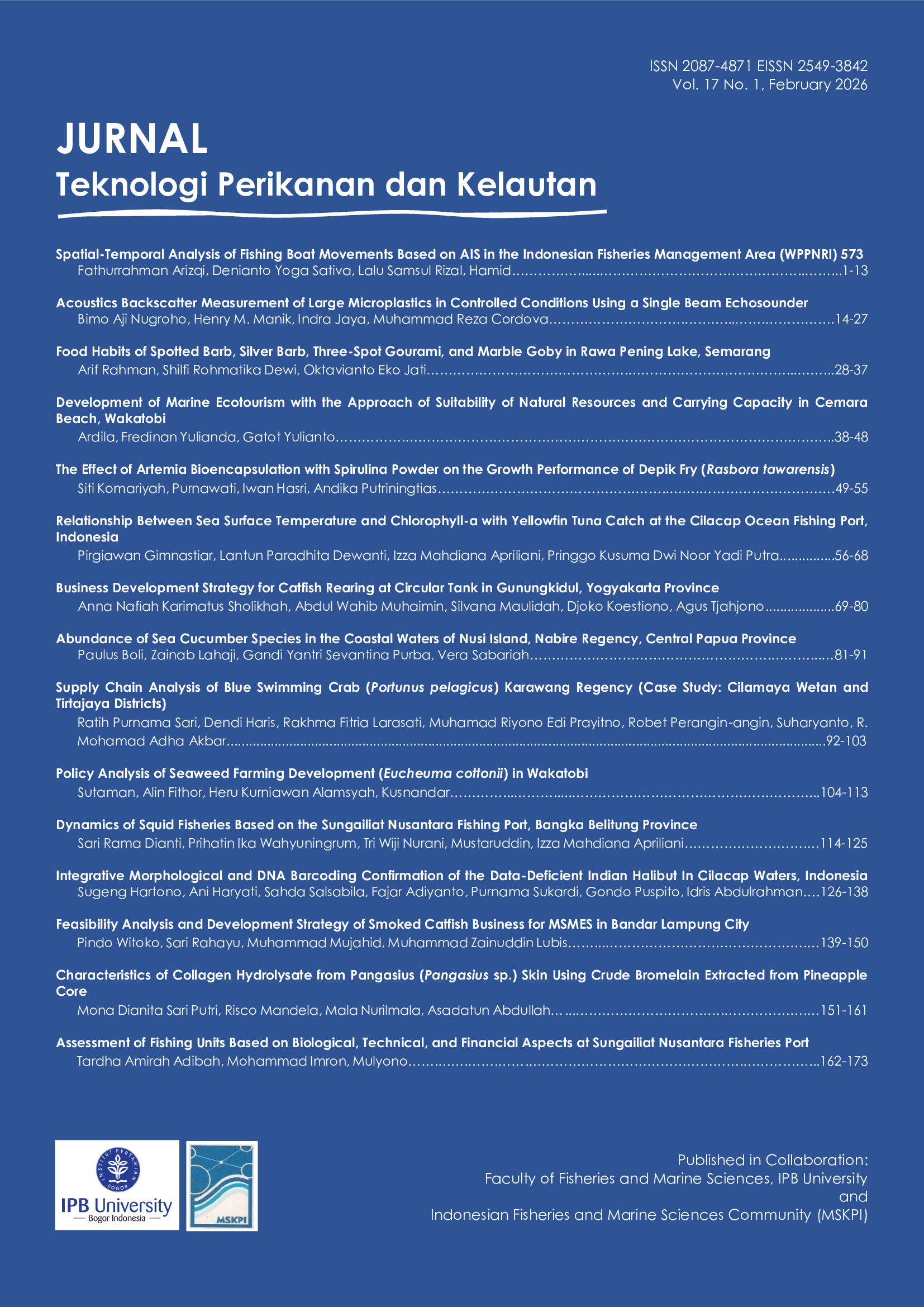
Jurnal Teknologi Perikanan dan Kelautan
Jurnal Teknologi Perikanan dan Kelautan (JTPK), formerly known as Maritek, was established in 1991 and is managed by the Department of Marine Science and Technology, Faculty of Fisheries and Marine Science, IPB University. Since 2010, the publication of JTPK has been jointly managed by the Faculty of Fisheries and Marine Science, IPB University, in collaboration with Indonesian Fisheries and Marine Sciences Community (MSKPI). The letter of agreement can be found here.
JTPK is accredited by the Ministry of Education, Culture, Research, and Technology (KEMENDIKBUDRISTEK) under Decree Number 72/E/KPT/2024, dated April 1, 2024 as "Sinta 2" of Indonesian journal accreditation level (until volume 17 issue 1 2026). Previously, JTPK published articles twice a year until 2023, then in 2024 JTPK published articles three times a year. Beginning with Volume 16 Number 1 (2025), articles are published four times a year (February, May, August, and November), and all articles are published in English.
JTPK articles cover research results in capture fisheries technology, marine technology, fisheries and marine remote sensing, fishery vessel technology, fishery product processing technology, aquaculture technology, marine biotechnology, coastal and marine management techniques, aquatic environment management techniques, and fisheries management related to the tropical resources. -
Jurnal Akuakultur Indonesia
Jurnal Akuakultur Indonesia (JAI) is a national scientific journal that publishes research and recent science development in aquaculture. Our focus is on the development of aquaculture field including that related to the health, nutrition, genetics, microbiology, biotechnology, culture systems, and socio-economics of aquaculture.
JAI was established in 2002 by the Indonesian Society of Scientific Aquaculture (ISSA) in association with the Department of Aquaculture, Faculty of Fisheries and Marine Science, IPB University. It publishes twice a year in January and July JAI and accepts manuscripts written in both English and in Bahasa (Indonesian). The JAI Editorial Team is preeminent and actively involved in various aquaculture research that guarantees an effective, efficient, legitimate, and comprehensive peer-review process.
JAI are indexed by SINTA (Science and Technology Index) and listed in S2 level (the decree number 105/E/KPT/2022). The journal is accredited by DIKTI (Higher Education Section of Ministry of Research, Technology, and Higher Education). Also, JAI has been registered/indexed in various indexing tools, i.e Crossref, Google Scholar, Portal Garuda, Scilit, Indonesian Base, Publication Index (IPI), Mendeley, and IPB Repository.
p-ISSN 1412-5269 / e-ISSN 2354-6700
Peer Review Process
JAI applies a double-blind review process with two independent expert reviewers. Upon submission, the manuscript will be checked for plagiarism using Turnitin software. We will directly cancel the manuscript with more than 30% similarity. Prior to review process, the Editor will assess the suitability of the manuscript to the scope of JAI. The Editor holds the right to the final decision of the article.
Open Access Policy
This journal provides immediate open access to its content on the principle that making research freely available to the public supports a greater global exchange of knowledge.
Publication ethics and malpractice statement
A publication ethics and publication malpractice statement
(composed using the Publishing ethics resource kit and in compliance with Elsevier recommendations)
Ethical guidelines for journal publication (These guidelines are based on Elsevier policies)
Jurnal Akuakultur Indonesia (JAI) publishes articles development of aquaculture field including that related to the health, nutrition, genetics, microbiology, biotechnology, culture systems, and socio-economics of aquaculture.human.
Jurnal Akuakultur Indonesia is a peer-reviewed journal publishes research and recent science development in aquaculture. It is important to agree upon standards of expected ethical behaviour for all parties involved in the act of publishing: the author, the journal editor, the peer reviewer, the publisher and the society.
AUTHOR DUTIES
Reporting standards
Authors of reports of original research should present an accurate account of the work performed as well as an objective discussion of its significance. Underlying data should be represented accurately in the paper. A paper should contain sufficient detail and references to permit others to replicate the work. Fraudulent or knowingly inaccurate statements constitute unethical behavior and are unacceptable. Review and professional publication articles should also be accurate and objective, and editorial ëopinioní works should be clearly identified as such.
Data access and retention
Authors may be asked to provide the raw data in connection with a paper for editorial review, and should be prepared to provide public access to such data, if practicable, and should in any event be prepared to retain such data for a reasonable time after publication.
Originality and plagiarism
The authors should ensure that they have written entirely original works, and if the authors have used the work and/or words of others, that this has been appropriately cited or quoted. Plagiarism takes many forms, from ëpassing offí anotherís paper as the authorís own paper, to copying or paraphrasing substantial parts of anotherís paper (without attribution), to claiming results from research conducted by others. Plagiarism in all its forms constitutes unethical publishing behavior and is unacceptable.
Multiple, redundant or concurrent publication
An author should not in general publish manuscripts describing essentially the same research in more than one journal or primary publication. Submitting the same manuscript to more than one journal concurrently constitutes unethical publishing behavior and is unacceptable. In general, an author should not submit for consideration in another journal a previously published paper. Publication of some kinds of articles (e.g. clinical guidelines, translations) in more than one journal is sometimes justifiable, provided certain conditions are met. The authors and editors of the journals concerned must agree to the secondary publication, which must reflect the same data and interpretation of the primary document. The primary reference must be cited in the secondary publication.
Acknowledgement of sources
Proper acknowledgment of the work of others must always be given. Authors should cite publications that have been influential in determining the nature of the reported work. Information obtained privately, as in conversation, correspondence, or discussion with third parties, must not be used or reported without explicit, written permission from the source. Information obtained in the course of confidential services, such as refereeing manuscripts or grant applications, must not be used without the explicit written permission of the author of the work involved in these services.
Authorship of the paper
Authorship should be limited to those who have made a significant contribution to the conception, design, execution, or interpretation of the reported study. All those who have made significant contributions should be listed as co-authors. Where there are others who have participated in certain substantive aspects of the research project, they should be acknowledged or listed as contributors. The corresponding author should ensure that all appropriate co-authors and no inappropriate co-authors are included on the paper, and that all co-authors have seen and approved the final version of the paper and have agreed to its submission for publication.
Hazards and human or animal subjects
If the work involves chemicals, procedures or equipment that have any unusual hazards inherent in their use, the author must clearly identify these in the manuscript. If the work involves the use of animal or human subjects, the author should ensure that the manuscript contains a statement that all procedures were performed in compliance with relevant laws and institutional guidelines and that the appropriate institutional committee(s) has approved them. Authors should include a statement in the manuscript that informed consent was obtained for experimentation with human subjects. The privacy rights of human subjects must always be observed.
Disclosure and conflicts of interest
All authors should disclose in their manuscript any financial or other substantive conflict of interest that might be construed to influence the results or interpretation of their manuscript. All sources of financial support for the project should be disclosed. Examples of potential conflicts of interest which should be disclosed include employment, consultancies, stock ownership, honoraria, paid expert testimony, patent applications/registrations, and grants or other funding. Potential conflicts of interest should be disclosed at the earliest stage possible.
Fundamental errors in published works
When an author discovers a significant error or inaccuracy in his/her own published work, it is the authorís obligation to promptly notify the journal editor or publisher and cooperate with the editor to retract or correct the paper. If the editor or the publisher learns from a third party that a published work contains a significant error, it is the obligation of the author to promptly retract or correct the paper or provide evidence to the editor of the correctness of the original paper.
EDITORIAL BOARD DUTIES
Publication decisions
The editor of a peer-reviewed Jurnal Akuakultur Indonesia is responsible for deciding which of the articles submitted to the journal should be published. The validation of the work in question and its importance to researchers and readers must always drive such decisions. The editor may be guided by the policies of the journal's editorial board and constrained by such legal requirements as shall then be in force regarding libel, copyright infringement and plagiarism. The editor may confer with other editors or reviewers in making this decision.
Fair play
An editor should evaluate manuscripts for their intellectual content without regard to race, gender, sexual orientation, religious belief, ethnic origin, citizenship, or political philosophy of the authors.
Confidentiality
The editor and any editorial staff must not disclose any information about a submitted manuscript to anyone other than the corresponding author, reviewers, potential reviewers, other editorial advisers, and the publisher, as appropriate.
Disclosure and conflicts of interest
Unpublished materials disclosed in a submitted manuscript must not be used in an editor's own research without the express written consent of the author. Privileged information or ideas obtained through peer review must be kept confidential and not used for personal advantage. Editors should recuse themselves (i.e. should ask a co-editor, associate editor or other member of the editorial board instead to review and consider) from considering manuscripts in which they have conflicts of interest resulting from competitive, collaborative, or other relationships or connections with any of the authors, companies, or (possibly) institutions connected to the papers. Editors should require all contributors to disclose relevant competing interests and publish corrections if competing interests are revealed after publication. If needed, other appropriate action should be taken, such as the publication of a retraction or expression of concern.
Involvement and cooperation in investigations
An editor should take reasonably responsive measures when ethical complaints have been presented concerning a submitted manuscript or published paper, in conjunction with the publisher (or society). Such measures will generally include contacting the author of the manuscript or paper and giving due consideration of the respective complaint or claims made, but may also include further communications to the relevant institutions and research bodies, and if the complaint is upheld, the publication of a correction, retraction, expression of concern, or other note, as may be relevant. Every reported act of unethical publishing behavior must be looked into, even if it is discovered years after publication.
REVIEWER DUTIES
Contribution to editorial decisions
Peer review assists the editor in making editorial decisions and through the editorial communications with the author may also assist the author in improving the paper. Peer review is an essential component of formal scholarly communication, and lies at the heart of the scientific method.
Promptness
Any selected referee who feels unqualified to review the research reported in a manuscript or knows that its prompt review will be impossible should notify the editor and excuse himself from the review process.
Confidentiality
Any manuscripts received for review must be treated as confidential documents. They must not be shown to or discussed with others except as authorized by the editor.
Standards of objectivity
Reviews should be conducted objectively. Personal criticism of the author is inappropriate. Referees should express their views clearly with supporting arguments.
Acknowledgement of sources
Reviewers should identify relevant published work that has not been cited by the authors. Any statement that an observation, derivation, or argument had been previously reported should be accompanied by the relevant citation. A reviewer should also call to the editor's attention any substantial similarity or overlap between the manuscript under consideration and any other published paper of which they have personal knowledge.
Disclosure and conflict of interest
Unpublished materials disclosed in a submitted manuscript must not be used in a reviewerís own research without the express written consent of the author. Privileged information or ideas obtained through peer review must be kept confidential and not used for personal advantage. Reviewers should not consider manuscripts in which they have conflicts of interest resulting from competitive, collaborative, or other relationships or connections with any of the authors, companies, or institutions connected to the papers.
-
Coastal and Ocean Journal (COJ)

Journal Title : Coastal and Ocean Journal Initials : COJ Abbreviation : Coast. Ocean J. Frequency : 2 (June, December) DOI : 10.29244/coj Online ISSN : 2549-8223 Publisher : IPB University, CCMRS, LMS, HAPPI Language : English Citation Analysis : Google Scholar Open Access Policy : Creative Commons Attribution (CC BY) COJ (Coastal and Ocean Journal) has an Online ISSN: 2549-8223 is a journal managed by Center for Coastal and Marine Resources Studies, LRI i-MAR, IPB University, with the aim of disseminating information about scientific developments in coastal and ocean management. The scientific, management, innovation and technological developments in the coastal and marine fields include: Fisheries Management, Marine Product Processing, Marine Biotechnology, Aquatic Resource Management, Coastal and Marine Resource Management, Mapping of Coastal and Marine Areas, Law and Socio-Economics of Coastal and Marine Areas, Coastal and Marine Social and Ecological Systems, Coastal and Marine Ecosystem Services, Coastal and Marine Resource Conservation, Coastal and Marine Environmental Pollution Control, Blue Economy and Blue Carbon, and Marine and Aquatic Invasive Species. Based on the LIPI ISSN Decree that the Coastal and Ocean Journal has been registered in the online ISSN with SK number no. 0005.25498223/JI.3.1/SK.ISSN/2017.03 - March 8, 2017.
AccreditationCOJ is accredited at SINTA 4, based on the results of the Scientific Journal Accreditation for Period IV of 2022 and the issuance of the Decree of the Director General of Higher Education, Research, and Technology Number 230/E/KPT/2022, dated 30 December 2022, concerning the Accreditation Ranking of Scientific Journals for Period IV of 2022.Manuscript Review ProcessManuscripts submitted to COJ will first be checked by the Administration for compliance with the author guidelines. If the manuscript meets the requirements, it will be reviewed by one (1) Editorial Board member and one (1) Peer Reviewer (Mitra Bestari) appointed by the Editor-in-Chief. The final decision on whether a manuscript is accepted or rejected rests with the Editor-in-Chief, based on the recommendations of the Editorial Board member and the Peer Reviewer.Published in June 2017, twice a year.
Electronic ISSN : 2549-8223
Journal Link : https://journal.ipb.ac.id/index.php/coj/index
Email : coj@apps.ipb.ac.id
Address : IPB Baranangsiang Campus, Raya Pajajaran Street, No 1, Bogor 16127 -
Jurnal Agronomi Indonesia (Indonesian Journal of Agronomy)
Jurnal Agronomi Indonesia (Indonesian Journal of Agronomy), formerly named Buletin Agronomi, first published in 1962. This journal is published by the Indonesian Society of Agronomy (Perhimpunan Agronomi Indonesia, PERAGI) and the Department of Agronomy and Horticulture, Faculty of Agriculture, IPB University, Bogor, Indonesia.
J. Agron. Indonesia publishes primary research papers, review articles, and research notes in all areas of agronomy. Issues are published online in April, August, and December.
This journal has been accredited Fourth Rank (Peringkat 4) by Decree of the Director General of Research and Development Number 295/C/C3/KPT/2026 dated January 2, 2026, concerning the Accreditation Ranking of Scientific Journals for Period 2 of the Year 2025. This accreditation is valid from Vol. 53 No. 1 (April 2025) to Vol. 57 No. 2 (August 2029).
-
Jurnal Teknologi Industri Pertanian
.jpg) About The Journal
About The JournalJournal of Agroindustrial Technology (Jurnal Teknologi Industri Pertanian, JTIN), is a peer reviewed and open access journal that publishes significant and important original research results, reviews and policy papers from all area of agroindustry covering process technology, industrial system engineering, and environmental management. It is published 3 times a year (April, August, and December) and has been indexed in Crossreff, Garuda, Sinta and EBSCO.
The journal was published by the Division of Agroindustrial Engineering and Technology under the Faculty of Engineering and Technology, IPB University (formerly Department of Agroindustrial Technology, Faculty of Agricultural Technology, Bogor Agricultural University) in collaboration with the Indonesian Agroindustry Association. This journal has been accredited by the National Journal Accreditation (ARJUNA), managed by the Ministry of Higher Education, Science and Technology, Republic of Indonesia, with Second Grade (Peringkat 2, SINTA 2). This latest accreditation is based on the Decree of the Director General of Research and Development, Ministry of Higher Education, Science and Technology, Number 295/C/C3/KPT/2026, dated January 2, 2026.
In its history, Jurnal Teknologi Industri Pertanian used to be named Buletin Penelitian Teknologi Industri (Bulletin of Industrial Technology Research) and published for the first time in 1982 with ISSN 0216-3160. Name change was made in 1991. Due to no changes in its scope and content, then the ISSN code is still in use until now. Since 2012, Jurnal Teknologi Industri Pertanian has certified as accredited journal based on decree No. 56/DIKTI/KEP/2012, and the online version of this journal has published with e-ISSN 2252-3901.
-
Sodality: Jurnal Sosiologi Pedesaan
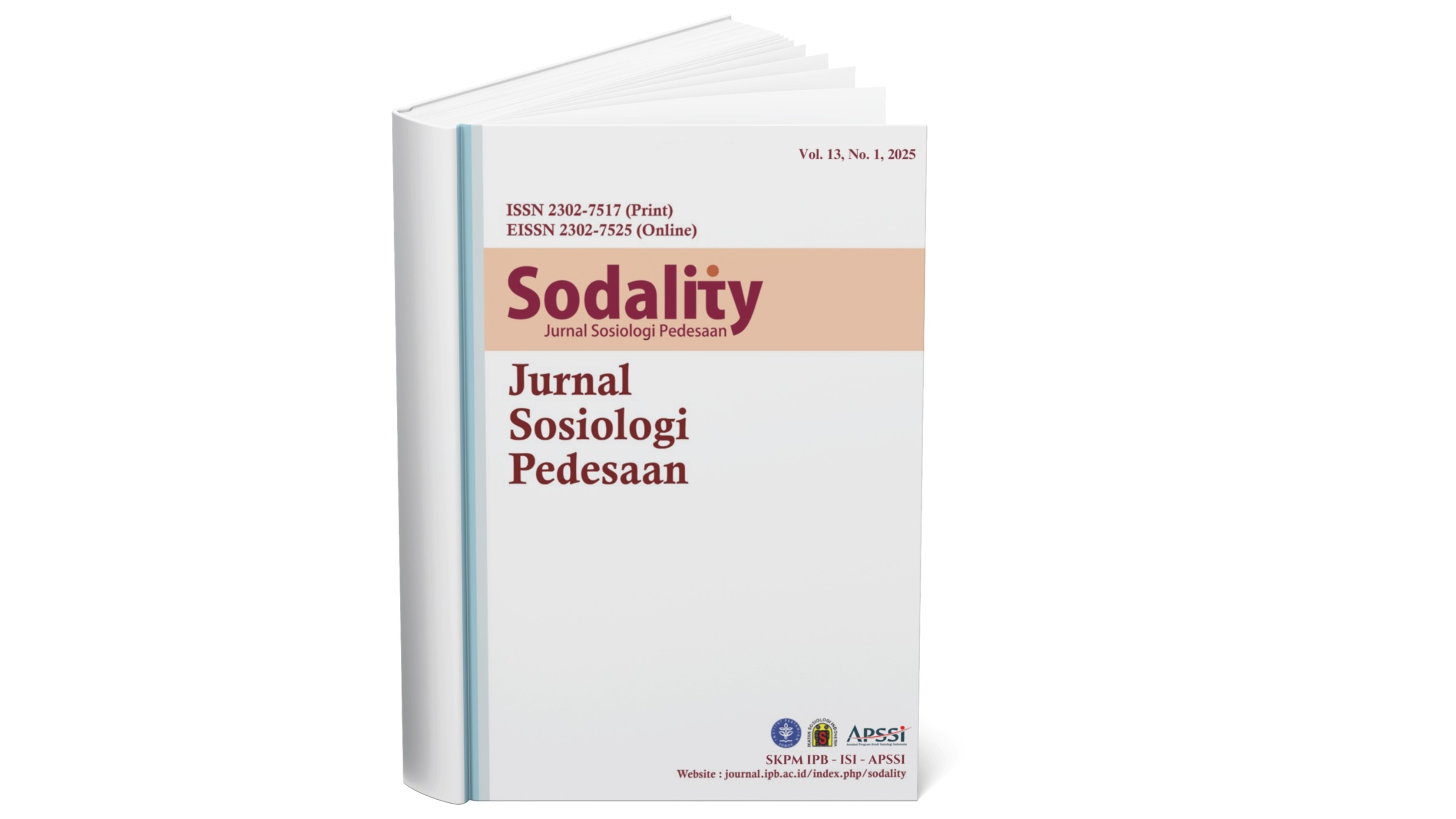
Journal title : Sodality: Jurnal Sosiologi Pedesaan Initials : Sodality Frequency : 3 issues per year DOI : 10.22500 Online ISSN : 2302-7525 Publisher : Department of Communication and Community Development Science, Faculty of Human Ecology, IPB University, Indonesia Language : English Citation Analysis : Google Scholar Open Access Policy : Creative Commons Attribution (CC BY) Sodality: Jurnal Sosiologi Pedesaan is a peer-reviewed scientific journal, focusing on Rural Sociological issues with transdisciplinary perspectives. The journal is especially concerned with social conflict and change, agrarian, environmental sustainability, gender, population and migration, food, community development and empowerment, livelihood, resilience, ecotourism, rural poverty, culture, digitalization, youth-intergenerational justice issues, indigenous people and local knowledge, and related issues from all local and global rural areas. This journal also accepts articles written based on critical systematic literature reviews of sociological issues.
Sodality: Jurnal Sosiologi Pedesaan is published by the Department of Communication and Community Development Sciences, Faculty of Human Ecology, IPB University, in association with the Indonesian Sociological Association (Ikatan Sosiologi Indonesia/ISI) and the Indonesian Association of Study Programme of Sociology (Asosiasi Program Studi Sosiologi Indonesia/APPSI).
Sodality: Jurnal Sosiologi Pedesaan is nationally accredited as a Sinta 2 journal in the Science and Technology Index (SINTA), an online scientific portal managed by the Ministry of Higher Education, Science, and Technology, Republic of Indonesia. The certificate can be seen here.
Indexing
Sodality: Jurnal Sosiologi Pedesaan is indexed and searchable in the following databases:
- Science and Technology Index (SINTA)
- Garba Rujukan Digital (GARUDA)
- Google Scholar
- Crossref
- EBSCO
- Scilit
- Dimensions
Publication Frequency
Sodality: Jurnal Sosiologi Pedesaan is scheduled for publication three a year, in April, August, and December. Each volume contains 5-8 articles, written in English.
Archiving
This journal utilizes the CLOCKSS and system to create a distributed archiving system among participating libraries and permits those libraries to create permanent archives of the journal for purposes of preservation and restoration.
-
Buletin Ilmiah Litbang Perdagangan
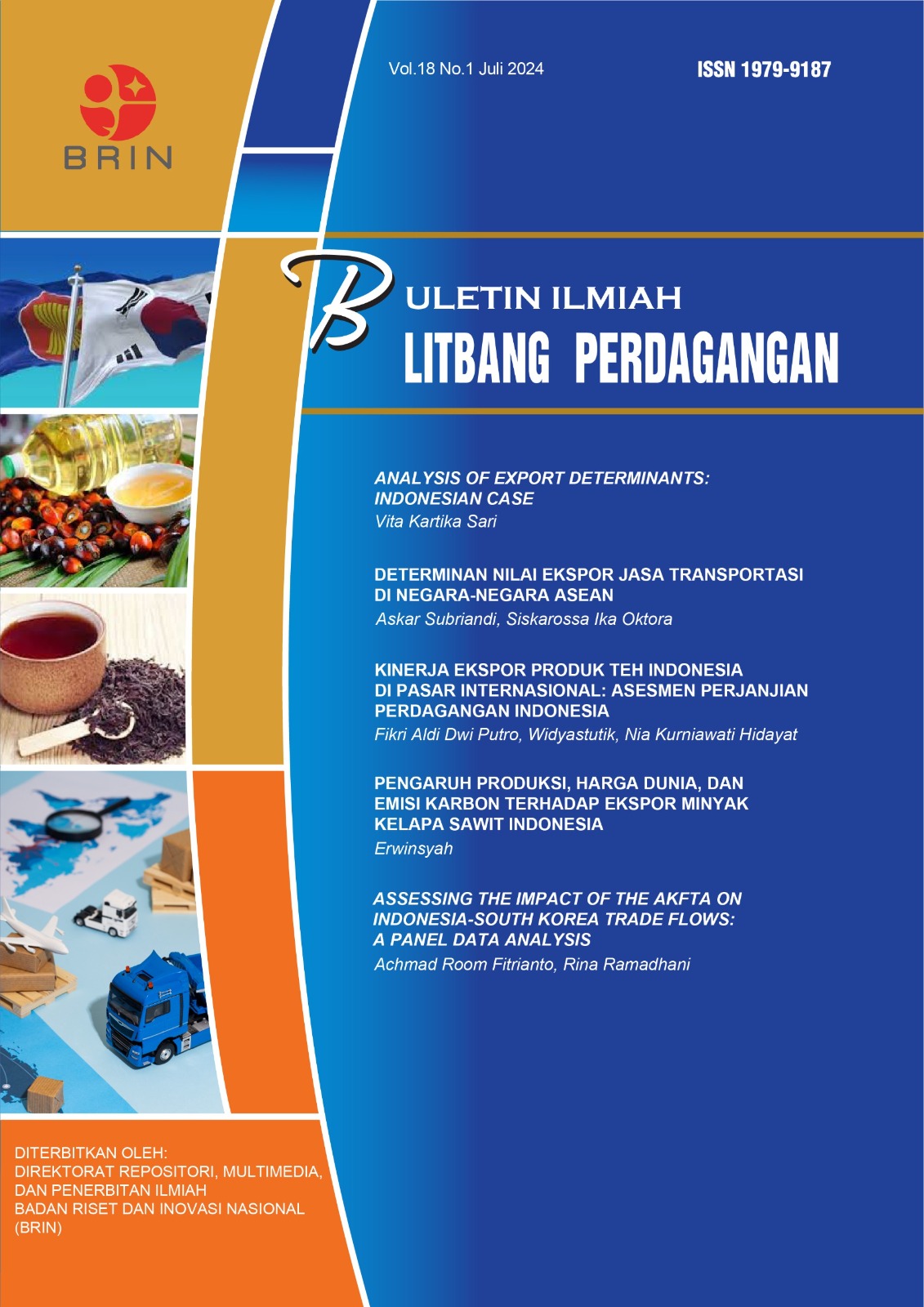
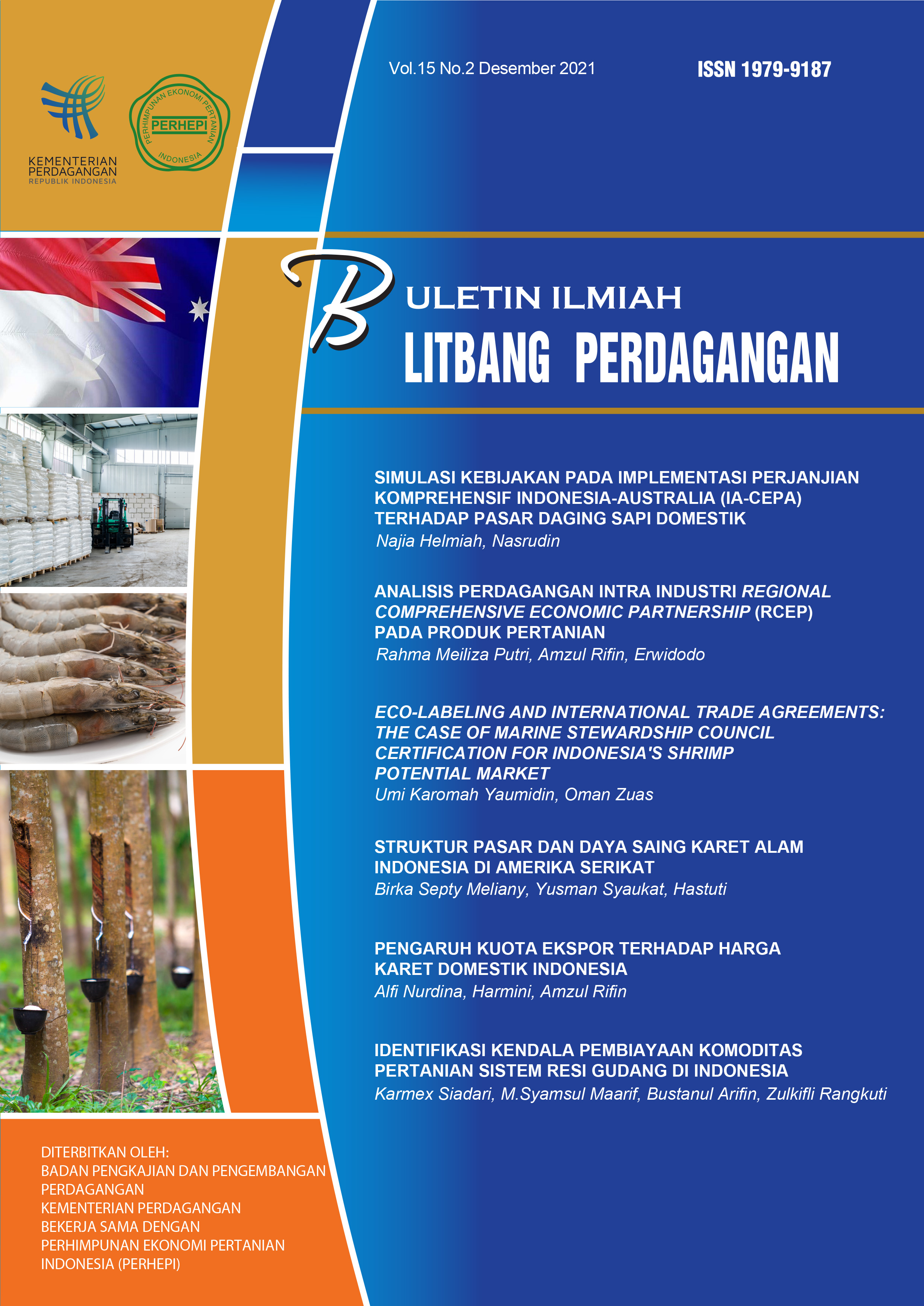 First published in 2007, Buletin Ilmiah Litbang Perdagangan (BILP) is a scientific journal published by the Departement of Economics, Faculty of Economics and Management IPB University. Previously this Journal was manage by The National Research and Innovation Agency (BRIN Publishing). Start mid this year (2025), this Journal move to IPB because of the Policy of the Government about research.
This bulletin is expected to be a media of dissemination and analysis of research results to be used as references for academics, practitioners, policy-makers, and the general public. BILP publishes report of research and analysis of trade sector and/or sector-related trade which have not been published in any other journals/scholarly publications, either in Bahasa Indonesia or English. Publishing twice a year in July and December, this Bulletin is directly disseminated to stakeholders in online publication.
Previous Archive of this Journal can be accessed at : https://ejournal.brin.go.id/bilp
Journal Name : Buletin Litbang Ilmiah Perdagangan ISSN (Electronic) : 2528-2751 ISSN (Print) : 1979-9187 Country : Indonesia Language : Indonesia, English Accreditation : Sinta 3 by Kemendikbudristek Publisher : IPB University DOI : Editor In Chief : Tony Irawan Citation Analysis : Google Scholar | Crossref | Garuda | Dimensions | Neliti | Base | ISSN | EBSCO OAI : BILP receives a manuscript with some topics/issues of trade and trade-related issues including:
(1) Domestic Trade and Consumer Protection (consumer and producer behaviour; inflation; price; logistics and distributions, trade facilities and infrastructure; trade services; subsidy; consumer protection; digital trade; commodity futures market; other related issues)
(2) Foreign Trade and Trade Protection (export; import; export fnancing; product and market diversification; tariff and non tariff measures; trade borders; market intelligent; market access; trade security; other related issues)
(3) International Trade Cooperation (bilateral, regional and multilateral agreement; trade services; bilateral, regional and multilateral negotiation)
-
Journal of Regional and Rural Development Planning (Jurnal Perencanaan Pembangunan Wilayah dan Perdesaan)
ISSN : 2549-3922
E-ISSN : 2549-3930
Focus and Scope
JP2WD covers topics related to regional science, regional and/or rural planning, regional economics, spatial and environmental planning, regional information system, community development, and public policy. Emphasis are placed on issues related to rural development in developing and middle-income countries in Asia as the geographical focus. Rural area can be treated whether as a functional unit or as administrative entities, with scopes including but not limited to its participatory planning, institutions, economic development, natural-resources management, and rural-urban linkages.
Peer Review Process
Manuscripts received by the editorial office will be sent to the editor. Editor will select and shortlist the manuscripts. The editor has the right to reject a manuscript if the manscript is not in accordance with the scope, category and writing guidelines of JP2WD. The editor will ask authors to make improvements/revisions before the manuscript is sent to reviewers.
Shortlisted manuscripts will be peer-reviewed by minimum two experts in the concerned field. Corresponding authors will be informed by e-mail on the progress of their submission.
After the review process by the two reviewers, most likely the manuscript will be returned to the author with minor or major repairs. If the manuscript is rejected, author can improve his overall manuscript based on the review result and send the edited manuscript back to undergo the procedure once again. Lengthy assessment process for each script demanded
writers to be commited and responsive to the progress of his manuscript.Journal of Regional and Rural Development Planning (Jurnal Perencanaan Pembangunan Wilayah dan Perdesaan - JP2WD) uses a double-blind peer review process. In it, reviewers don't know the identity of authors, and authors don't know the identity of reviewers. No direct communication is allowed between the reviewers and the authors.
Publication Frequency
Starting Volume 1 (2017), JP2WD published three times a year: February, June and October.
Open Access Policy
This journal provides immediate open access to its content on the principle that making research freely available to the public supports a greater global exchange of knowledge.
Journal History
Study Program of Regional and Rural Development Planning Sciences (PS PWD) and Center for Regional System Analysis, Planning, and Development (Crestpent-P4W) - IPB's LPPM have had an idea to initiate and pioneering journal in sector of regional and rural development planning .
Regional and rural development planning sector increasingly play an important role after the enactment of regional autonomy, which can be seen among others through the establishment of the Ministry of Village, Development of Disadvantaged Regions and Transmigration, establishment of Village Laws, implementation of village autonomy, and prioritizing rural development. This makes the need for a space for scientific discussion space related to the new development paradigm, a communication forum related to research and the direction of rural development policies, not only in the scope of Indonesia, but also in other parts of the world, especially developing countries, and continental regions Asia.
With these supporting factors, at the beginning of 2016 PS PWD and P4W IPB invite Study Program of Regional Planning Science (PS PWL), and Association of Regional and Rural Development Planning Alumni (IAPWD) of IPB to initiate a later journal named the Journal of Regional and Rural Development Planning (Jurnal Perencanaan Pembangunan Wilayah dan Perdesaan / JP2WD).
In June 2016, the JP2WD secretariat began actively working to prepare requirements, conduct publications, call for papers, select scripts and compile journals, until February 2017 the first edition of JP2WD was successfully published.
JP2WD is a publication medium of original writing relating to extensive regional and rural development planning which is published three times a year in February, June and October.
-
Indonesian Journal of Primatology
Focus and Scope
Indonesian Journal of Primatology (InaJP) is an international peer-reviewed and open-access journal that publishes significant and important research from all areas of primatology fields such as biomedical, biology, and conservation. Bio-anthropology, bio-psychology, social, policy, and environmental aspects of primatology are covered by InaJP.
InaJP is published by Primate Research Center, IPB University, Indonesia. We accept submissions from all over the world. Our Editorial Board members are prominent and active international researchers in primatology fields who ensure an efficient, fair, and constructive peer-review process. All accepted articles will be published on payment of an article-processing charge and will be freely available to all readers with worldwide visibility and coverage.
Section Policies
InaJP is a peer-reviewed scientific journal that publishes original research articles, reviews, and short communications. All of the manuscripts must be submitted through online submission and go through a peer-review process.
Peer Review Process
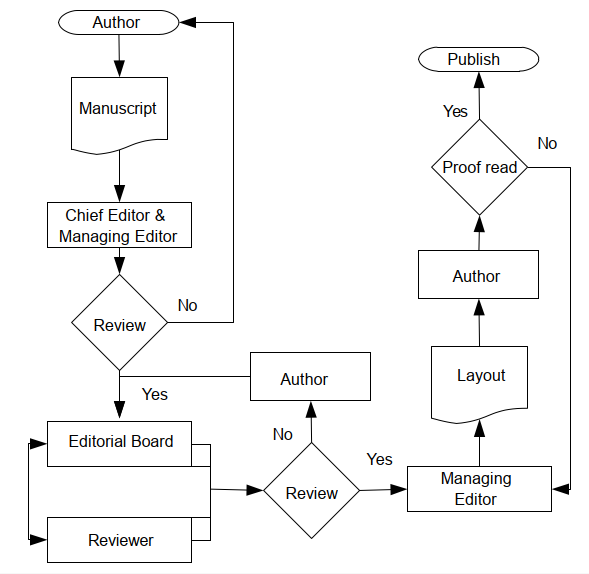
InaJP implements Double-blind Peer Review Process. Editor in Chief will assign the manuscript to a corresponding section editor for further handling. The section editor will request at least two scientists to review the manuscript. Based on the comments from the reviewers. The editor and Editor in Chief will make the decision on the manuscript.
Publication Frequency
Starting in 2022, InaJP will be published two times every year in June and December.
Open Access Policy
This journal provides immediate open access to its content on the principle that making research freely available to the public supports a greater global exchange of knowledge.
Publication Ethics and Malpractice Statement
A Publication Ethics and Publication Malpractice Statement (composed using the publishing ethics resource kit and in compliance with Elsevier recommendations)
Ethical Guidelines for Journal Publication (These guidelines are based on Elsevier policies)
Indonesian Journal of Primatology publishes articles and short communications in primatology fields such as biomedical, biology, and conservation. InaJP covers the social and environmental aspects of primatology.
Indonesian Journal of Primatology is a peer-reviewed journal publishing articles to develop a coherent and respected network of primatology knowledge. It is important to agree upon standards of expected ethical behavior for all parties involved in the act of publishing: the author, the journal editor, the peer reviewer, the publisher, and the society.
Primate Research Center IPB University as the publisher of the Indonesian Journal of Primatology takes its duties of guardianship in all stages of the publishing process and we recognize our ethical and other responsibilities.
We are committed to ensure that advertising, reprint or other commercial revenue has no impact or influence on editorial decisions. In addition, Primate Research Center IPB University and the Editorial Board will assist useful and necessary communications with other journals and/or publishers.
Duties of Authors
Reporting standards
Authors of original research should present an accurate account of the work performed as well as an objective discussion of its significance. Underlying data should be represented accurately in the paper. A paper should contain sufficient detail and references to permit others to replicate the work. Fraudulent or knowingly inaccurate statements constitute unethical behavior and are unacceptable. Review and professional publication articles should also be accurate and objective, and editorial opinions should be clearly identified as such.
Data access and retention
Authors may be asked to provide the raw data in connection with a paper for editorial review, and should be prepared to provide public access to such data, if practicable, and should in any event be prepared to retain such data for a reasonable time after publication.
Originality and plagiarism
The authors should ensure that they have written entirely original works, and have appropriately cited or quoted the work and/or words of others. Plagiarism takes many forms, from passing off another paper as the author own paper, to copying or paraphrasing substantial parts of anotherís paper (without attribution), to claiming results from research conducted by others. Plagiarism in all its forms constitutes unethical publishing behavior and is unacceptable.
Multiple, redundant or concurrent publication
An author should not in general publish manuscripts describing essentially the same research in more than one journal or primary publication. Submitting the same manuscript to more than one journal concurrently constitutes unethical publishing behavior and is unacceptable. In general, an author should not submit for consideration in another journal a previously published paper. Publication of some kinds of articles (e.g. clinical guidelines, translations) in more than one journal is sometimes justifiable when certain conditions are met. The authors and editors of the journals concerned must agree to the secondary publication, which must reflect the same data and interpretation of the primary document. The primary reference must be cited in the secondary publication.
Acknowledgement of sources
Proper acknowledgment of the work of others must always be given. Authors should cite publications that have been influential in determining the nature of the reported work. Information obtained privately, as in conversation, correspondence, or discussion with third parties, must not be used or reported without explicit, written permission from the source. Information obtained in the course of confidential services, such as refereeing manuscripts or grant applications, must not be used without the explicit written permission of the author of the work involved in these services.
Authorship of the paper
Authorship should be limited to those who have made a significant contribution to the conception, design, execution, or interpretation of the reported study. All those who have made significant contributions should be listed as co-authors. Where there are others who have participated in certain substantive aspects of the research project, they should be acknowledged or listed as contributors. The corresponding author should ensure that all appropriate co-authors and no inappropriate co-authors are included on the paper, and that all co-authors have seen and approved the final version of the paper and have agreed to its submission for publication.
Hazards and human or animal subjects
If the work involves chemicals, procedures or equipment that have any unusual hazards inherent in their use, the author must clearly identify these in the manuscript. If the work involves the use of animal or human subjects, the author should ensure that the manuscript contains a statement that all procedures were performed in compliance with relevant laws and institutional guidelines and that the appropriate institutional committee(s) has approved them. Authors should include a statement in the manuscript that informed consent was obtained for experimentation with human subjects. The privacy rights of human subjects must always be observed.
Disclosure and conflicts of interest
All authors should disclose in their manuscript any financial or other substantive conflict of interest that might be construed to influence the results or interpretation of their manuscript. All sources of financial support for the project should be disclosed. Examples of potential conflicts of interest which should be disclosed include employment, consultancies, stock ownership, honoraria, paid expert testimony, patent applications/registrations, and grants or other funding. Potential conflicts of interest should be disclosed at the earliest stage possible.
Fundamental errors in published works
When an author discovers a significant error or inaccuracy in his/her own published work, it is the authorís obligation to promptly notify the journal editor or publisher and cooperate with the editor to retract or correct the paper. If the editor or the publisher learns from a third party that a published work contains a significant error, it is the obligation of the author to promptly retract or correct the paper or provide evidence to the editor of the correctness of the original paper.
Duties of the Editorial Board (These guidelines are based on Elsevier policies and COPE Best Practice Guidelines for Journal Editors)
Publication decisions
The editor of a peer-reviewed Indonesian Journal of Primatology is responsible for deciding which of the articles submitted to the journal should be published. The validation of the work in question and its importance to researchers and readers must always drive such decisions. The editor may be guided by the policies of the journal's editorial board and constrained by such legal requirements as shall then be in force regarding libel, copyright infringement and plagiarism. The editor may confer with other editors or reviewers in making this decision.
Fair play
An editor should evaluate manuscripts for their intellectual content without regard to race, gender, sexual orientation, religious belief, ethnic origin, citizenship, or political philosophy of the authors.
Plagiarism Check
InaJP Editor will ensure that every published article will not exceed 20% similarity Score. Plagiarism screening will be conducted by JEI Editor using Turnitin Similarity Check.
Confidentiality
The editor and any editorial staff must not disclose any information about a submitted manuscript to anyone other than the corresponding author, reviewers, potential reviewers, other editorial advisers, and the publisher, as appropriate.
Disclosure and conflicts of interest
Unpublished materials disclosed in a submitted manuscript must not be used in an editor's own research without the express written consent of the author. Privileged information or ideas obtained through peer review must be kept confidential and not used for personal advantage. Editors should recuse themselves (i.e. should ask a co-editor, associate editor or other member of the editorial board instead to review and consider) from considering manuscripts in which they have conflicts of interest resulting from competitive, collaborative, or other relationships or connections with any of the authors, companies, or (possibly) institutions connected to the papers. Editors should require all contributors to disclose relevant competing interests and publish corrections if competing interests are revealed after publication. If needed, other appropriate action should be taken, such as the publication of a retraction or expression of concern.
Involvement and cooperation in investigations
An editor should take reasonably responsive measures when ethical complaints have been presented concerning a submitted manuscript or published paper, in conjunction with the publisher (or society). Such measures will generally include contacting the author of the manuscript or paper and giving due consideration of the respective complaint or claims made, but may also include further communications to the relevant institutions and research bodies, and if the complaint is upheld, the publication of a correction, retraction, expression of concern, or other note, as may be relevant. Every reported act of unethical publishing behavior must be looked into, even if it is discovered years after publication.
Duties of reviewers (These guidelines are based on based on Elsevier policies and COPEís Best Practice Guidelines for Journal Editors)
Contribution to editorial decisions
Peer review assists the editor in making editorial decisions and through the editorial communications with the author may also assist the author in improving the paper. Peer review is an essential component of formal scholarly communication, and lies at the heart of the scientific method.
Promptness
Any selected referee who feels unqualified to review the research reported in a manuscript or knows that its prompt review will be impossible should notify the editor and excuse himself from the review process.
Confidentiality
Any manuscripts received for review must be treated as confidential documents. They must not be shown to or discussed with others except as authorized by the editor.
Standards of objectivity
Reviews should be conducted objectively. Personal criticism of the author is inappropriate. Referees should express their views clearly with supporting arguments.
Acknowledgement of sources
Reviewers should identify relevant published work that has not been cited by the authors. Any statement that an observation, derivation, or argument had been previously reported should be accompanied by the relevant citation. A reviewer should also call to the editor's attention any substantial similarity or overlap between the manuscript under consideration and any other published paper of which they have personal knowledge.
Disclosure and conflict of interest
Unpublished materials disclosed in a submitted manuscript must not be used in a reviewerís own research without the express written consent of the author. Privileged information or ideas obtained through peer review must be kept confidential and not used for personal advantage. Reviewers should not consider manuscripts in which they have conflicts of interest resulting from competitive, collaborative, or other relationships or connections with any of the authors, companies, or institutions connected to the papers.
Post-Publication Discussions and Corrections
InaJP publishes corrections if there are serious errors arising from author errors (Corrigendum) or editorial errors (Errata). Readers can discuss and make corrections by sending a letter to the editor via email. The editor will communicate with the corresponding author and relevant editorial board members to resolve the issue. Post-publishing edits will be published with the original article.
Guidelines for Filing a Competing Interest Statement
Definition:
Conflict of interest (COI) exists when there is a divergence between an individual's private interests (competing interests) and his or her responsibilities to scientific and publishing activities such that a reasonable observer might wonder if the individual's behavior or judgment was motivated by considerations of his or her competing interests. COI in medical publishing affects everyone with a stake in research integrity including journals, research/academic institutions, funding agencies, the popular media, and the public. COI may exist in numerous forms including financial ties, academic commitments, personal relationships, political or religious beliefs, and institutional affiliations. All authors should declare their COI, if any, during the manuscript submission. Reviewers are asked to declare their COI after they accept to review a manuscript. Editors should also declare their COI during handling of a manuscript.
Managing COI depends on disclosure because it is not possible to routinely monitor or investigate whether competing interests are present. COI disclosed by authors will be presented in the Editorial Board and an appropriate action will be taken. Those reviewers and Editors with COI will be excluded from the manuscript process. If competing interests surface from other sources after a manuscript is submitted or published, Indonesian Journal of Primatology investigates allegations of COI and depending on their nature, appropriate actions will be taken if the allegations were found to be true. If a manuscript has been published and COI surfaces later, the journal will publish the results of the investigation as a correction to the article and ask the author to explain, in a published letter, why the COI was not revealed earlier.
-
Jurnal Hortikultura Indonesia
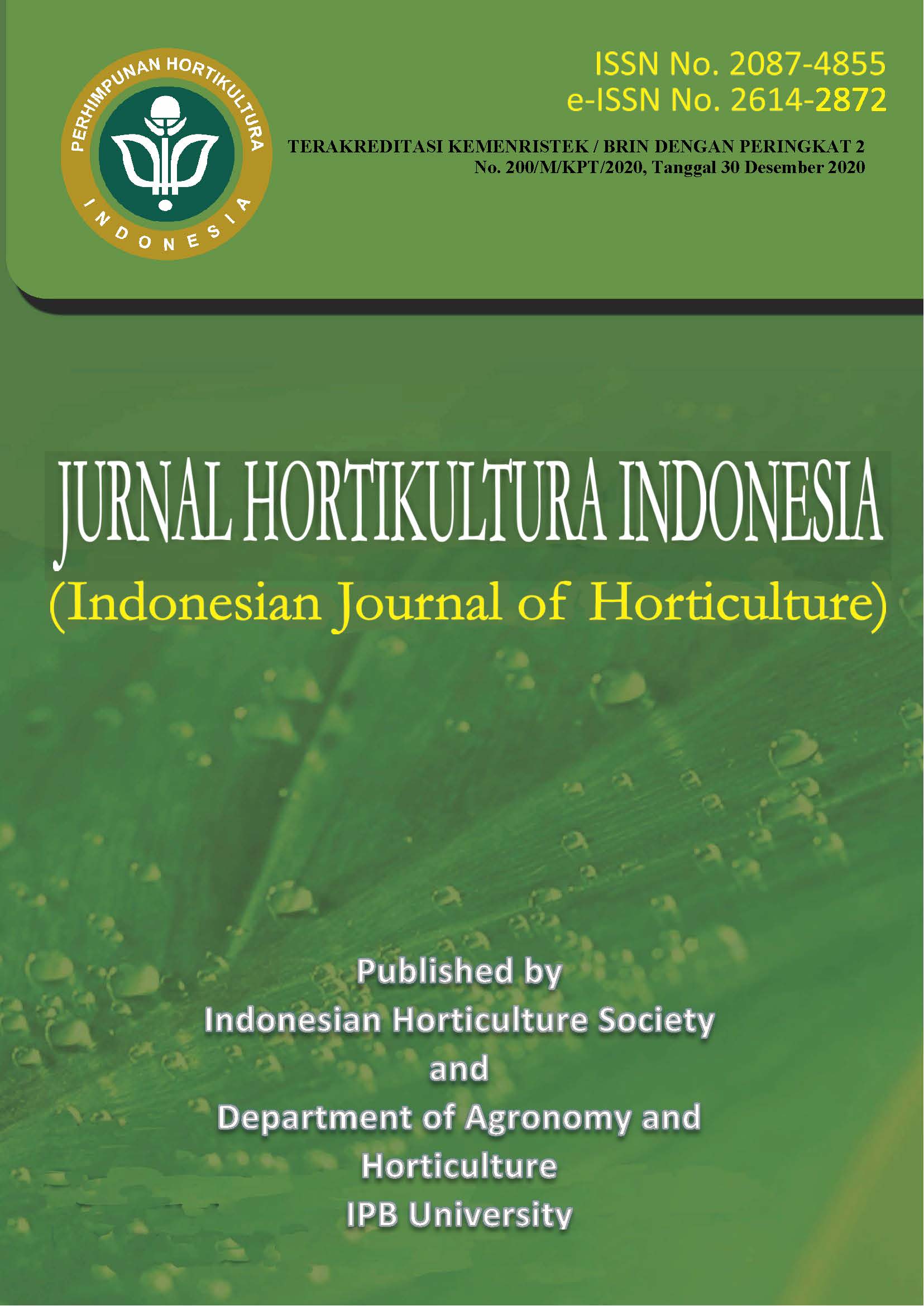
Jurnal Hortikultura Indonesia (JHI), (Indonesian Journal of Horticulture), is an official publication of the Indonesian Society for Horticulture, founded in 2010, first launched and published in National Seminar of Indonesian Horticulture, Udayana University – Bali at 25th November 2010.
The JHI publishes primary research paper, review article, policy analysis and research notes and preliminary results in all areas of horticulture. Manuscripts could be written either in English or in Indonesia. JHI is a triannual publication; April, August, December.
The JHI is published Indonesian Horticulture Society (PERHORTI) in partnership with Department of Agronomy and Horticulture, Faculty of Agriculture, Bogor Agricultural University (IPB)
-
Marine Fisheries : Journal of Marine Fisheries Technology and Management
Focus and Scope
Aims: MARINE FISHERIES aims to publish an original research focused on technology and management of capture fisheries, such as fishing equipment, management and transportation of fishing vessel, port management, and technology of capture fisheries.
Core Scope:
Marine Fisheries is a specialized peer-reviewed journal dedicated exclusively to the advancement of Capture Fisheries Science, aiming to bridge the gap between fisheries engineering technology and operational management.
Detailed Scope (Redefined for Uniqueness):
Fishing Technology & Engineering (Hard Science Focus)
- Advanced Fishing Gear Technology: Design, selectivity, and environmentally friendly modifications.
- Fishing Vessel Naval Architecture: Hydrodynamics, stability, propulsion systems, and energy-efficient vessel design.
- Marine Instrumentation & Acoustics: Acoustic prospecting, fish detection technology, and underwater sensors.
- Material Science in Fisheries: Synthetic fibers, biodegradable materials for gear, and vessel construction materials.
Smart Fisheries & Digitalization (Modern/Unique Angle)
- Fisheries System Information: Electronic logbooks, VMS (Vessel Monitoring Systems), and IoT in capture fisheries.
- Artificial Intelligence & Big Data: Applications of AI/Machine Learning for fishing ground prediction, catch identification, and operational optimization.
Fisheries Management & Port Operations (Management Focus)
- Fishing Port Engineering & Logistics: Port facility planning, supply chain management, and cold chain logistics at landing sites.
- Capture Fisheries Policy & Governance: Bio-economic analysis, catch quota management, and regulation impact assessment.
- Human Factors & Safety: Occupational Health and Safety (K3) for fishermen, ergonomics, and socio-technical aspects of fishing operations.
Responsible & Sustainable Fishing (Global Relevance)
- Fish Behavior & Interaction: Responses of marine life to fishing gear and environmental stimuli.
- Low Impact Fishing: Technologies to reduce bycatch, discards, and seabed impact (GHG emission reduction in fisheries).
Peer Review Process
The eligibility of manuscripts for publication in Marine Fisheries: Journal of Marine Fisheries Technology and Management (MARFISH) is assessed by the reviewers and the MARFISH Editorial Board. The review process is conducted by double-blind review. The Editor-in-Chief makes the final decision whether the manuscript is recommended to be accepted, rejected, or returned to the author for revision.
- When submitting a manuscript, authors must fulfil the conditions set by MARFISH related to Aims and Scope and Publications Ethics. Along with the manuscript, the author must also attach the Author Agreement Declaration. Author must also follow the manuscript format specified by MARFISH (Author Guidelines/Manuscript template).
- After the manuscript passes the administrative selection, the editor will check the similarity using Turnitin software. If the similarity reaches more than 30%, the manuscript will be rejected.
- Once the manuscript passes the similarity check, the Editor-in-Chief and Associate Editor will evaluate the manuscript through a pre-qualification review to determine suitability for further review.
- At this stage, the manuscript can be rejected without a review process, for three general reasons:
- The topic of the manuscript does not fit the scope of MARFISH and may be more suitable for publication elsewhere.
- The substance of the manuscript does not meet MARFISH standards; the data used is incomplete; the methodology used is not appropriate; there is no novelty and no development of existing knowledge; or there is no consistency between the objectives, research design/methods, evidence, and conclusions.
- Manuscripts are not written following the MARFISH guidelines mentioned in the Author Guidelines.
- Once the manuscript meets the prequalification requirements, it will be sent to two qualified Reviewers selected by the Editor-in-Chief and Associate Editor.
- The reviewing partners should review the manuscript and return it with their recommendations, comments, and suggestions to the Editor-in-Chief within 2 weeks of receiving the review request. If one of the Reviewer recommends rejection, and conversely, another Reviewer recommends revision, then the Editor-in-Chief will ask the third Reviewer or the Board of Editors to decide on the acceptance or rejection of the manuscript.
- Manuscripts that need to be revised will be returned to the author, and the author must return the revised manuscript to the Editor-in-Chief via OJS MARFISH within 7 working days from the notification/email from the Editor-in-Chief if received. Authors can request an extension of time to the Editor-in-Chief before the revision deadline expires. If within two times the predetermined time limit, the author still does not respond, the Editor-in-Chief can stop the publication process or the manuscript is given a "Rejected" status.
- For manuscripts that request revision checking by a Reveiwers, the revised manuscript will be sent to the reveiwers upon request. At this stage, the Reviewers should review the revised manuscript and return it with their recommendations, comments, and suggestions to the Editor-in-Chief within 2 weeks of receiving the review request.
- Next, the Editor-in-Chief will send the revised manuscript to the Associate Editor to check whether the manuscript has been revised in accordance with the suggestions of the Reviewers.
- The Associate Editor may make a recommendation to the Editor-in-Chief that the manuscript should be returned to the author, accepted, or rejected within 2 weeks.
- At this stage, the manuscript can be rejected if the author does not revise the manuscript according to the suggestions of the Reviewers and/or the Editorial Board, or does not provide an appropriate response to these suggestions.
- If the manuscript is rejected, the author will be notified by the Editor-in-Chief with a statement of reasons for rejection. The author may appeal to the Editor-in-Chief if he/she believes that an unfair decision has been made by attaching the author's reasons. The Editor-in-Chief will review and discuss the reasons with the Associate Editor responsible for the manuscript, and then decide whether to accept or reject the appeal.
- Once received by the Editor-in-Chief, the manuscript will be forwarded to the technical editor for layout. The Editor-in-Chief will send an acceptance letter announcing the publication of the edition attached with proof reading to the author.
Publication Frequency
Marine Fisheries is published three times a year: March, July and November
Open Access Policy
This journal provides immediate open access to its content on the principle that making research freely available to the public supports a greater global exchange of knowledge.
Partnership
This journal is managed in collaboration between Fisheries Resources Utilization Department and Capture Fisheries Consortium Partnership Forum (FK2PT) -- MoU Document
Advertising Policy
This journal does not accept or display any advertisements. The journal operates solely as an academic publication platform and does not generate revenue from advertising sources.
All editorial decisions are made independently and are not influenced by any commercial interests. The absence of advertising ensures that the integrity, transparency, and objectivity of the peer review and publication processes are fully maintained.
Revenue
The journal operates under a fully open-access model. To support editorial processes, peer review management, production, and online dissemination, an Article Processing Charge (APC) is applied to accepted manuscripts. This fee ensures that all published articles are freely accessible to readers worldwide without subscription barriers.
-
ALBACORE Jurnal Penelitian Perikanan Laut
Albacore is a scientific journal of the Department of Fisheries Resource Utilization (PSP), Faculty of Fisheries and Marine Sciences (FPIK), Bogor Agricultural University (IPB). This journal continues the PSP Bulletin, which was launched from 1992 to 2013. From 2017 to 2024, it is scheduled to publish three (3) publications per year (February, June, and October), with ten (10) articles per issue. In 2025, the journal will begin publishing four (4) publications per year (February, May, August, and November), with fifteen (15) articles per issue.
This journal's articles cover the results of fisheries and marine research on aspects of exploitation and exploration technology, shipping and navigation, fishing ports, occupational safety, fish behavior, regulations, legislation, and policies, general fisheries resource management, and maritime transportation.
The manuscripts published in this journal come from research or academic reviews from various universities, government institutions and observers of the problems of managing capture fisheries resources and maritime transportation in Indonesia.
-
Submission Page of Acta VETERINARIA Indonesiana
 Acta VETERINARIA Indonesiana (Acta Vet Indones.) also known as The Indonesian Veterinary Journal, is an open-access, peer-reviewed, online journal dedicated to the advancement of veterinary and life sciences. To ensure high scientific relevance and novelty, the journal exclusively publishes original manuscripts derived from research conducted within the last five years. Published entirely in English, the journal accepts a range of article formats, including original research papers, comprehensive reviews, clinical case studies, and short communications. Acta VETERINARIA Indonesiana is published by the School of Veterinary Medicine and Biomedical Sciences, IPB University, in prestigious collaboration with the Indonesian Veterinary Medical Association (PDHI). This journal is published since 2013, Starting in 2021, the journal adopted a triannual publication schedule, publishing three issues each year in March, July, and November. P-ISSN 2337-3202, E-ISSN 2337-4373, Accreditation of "SINTA 2" Decree of the Director General of Higher Education, Research, and Technology of the Republic of Indonesia Number 10/C/C3/DT.05.00/2025
All articles published in Acta Vet Indones has been indexed in:
- Sinta
- Garuda
- Google Scholar
- DOAJ
- EBSCO
- and being process for other directory of research journal index
-
Halal Studies and Society
Journal title : Halal Studies and Society Subject : Halal Studies Language : English ISSN : 3031-416X (online) Frequency : 3 issues per year DOI : 10.29244/hass by Crossref Editor-in-chief : Prof. Dr. Anuraga Jayanegara, M.Sc., M.Pd. Publisher : IPB University, Bogor, West Java, Indonesia OAI : https://journal.ipb.ac.id/index.php/hass/oai 
Halal Studies and Society (HaSS) is a multidisciplinary journal and communication media as well as a means of ongoing discussion on relevant issues based on Halal specifications. In a global context, the halal issue is no longer limited to Muslims or certain religions but has become a trend related to lifestyle in general. A halal lifestyle includes the consumption of products and services that comply with the principles of Islamic law (shariah). Therefore, Halal Products are not only limited to food and drinks. But it also covers various sectors including education, tourism, cosmetics, medicine, finance, fashion, arts, slaughther and culture.
CALL FOR PAPERS
Halal Studies and Society (HaSS), a multidisciplinary journal published by the Directorate for Strategic Studies and Academic Reputation, IPB University, announces a call for papers on halal-related themes. We invite submissions of high-quality scientific manuscripts via the online system. To encourage national and international collaboration, HaSS provides publication incentives for accepted articles, namely IDR 2,000,000 for nationally collaborative papers and IDR 4,000,000 for internationally collaborative papers.
Thank you for your attention, we look forward to receiving your manuscripts.
Regards
Editor in Chief
-
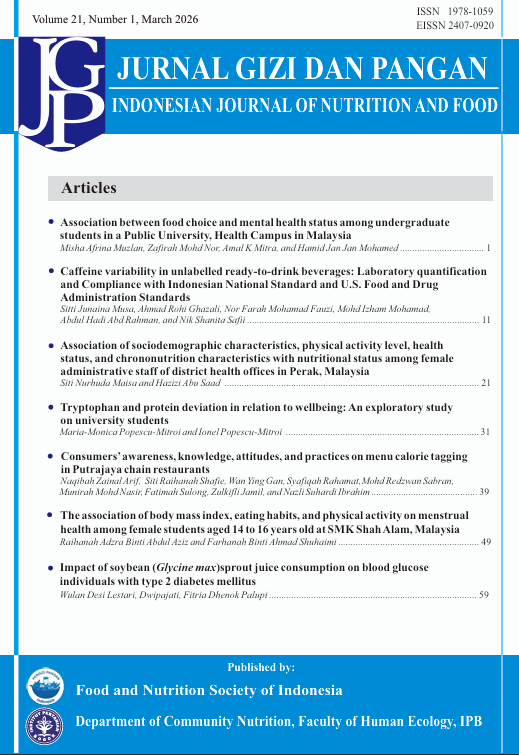
Jurnal Gizi dan Pangan
ATTENTION!
For register and new submission, please visit this website:
https://submission2-journal.ipb.ac.id/jgizipangan/index
For the latest published papers or archives and other information, please visit our main website:
-
AL-MUZARA'AH
AL-MUZARA'AH – Journal of Islamic Economics, is a collaborative journal of the Department of Islamic Economics, IPB University with the Indonesian Association of Islamic Economist (IAEI). The aim of the journal is to communicate and as the media of academic socialization by providing a platform for publication of research in the fields of Islamic economics, Islamic finance, Islamic microfinance, Islamic banking, Islamic insurance, Islamic management, Islamic agriculture and environment, halal industry, Islamic social finance and poverty alleviation, Islamic law and sharia issues in economics and finance, Islamic securitization and sukuk, Islamic capital market, Islamic accounting, Islamic development economics, and other topics related to this area.
AL-MUZARA'AH has been Accredited SINTA Rank 2 by Directorate General of Research and Development Strengthening, Ministry of Higher Education, Science and Technology of the Republic of Indonesia (Kemendiktisaintek RI) No 295/C/C3/KPT/2026 which is valid for 5 (five) years since enacted on 3 February 2026. AL-MUZARA'AH has been registered in Google Scholar, Crossref, Garda Rujukan Digital (Garuda), Dimensions, and EBSCO.